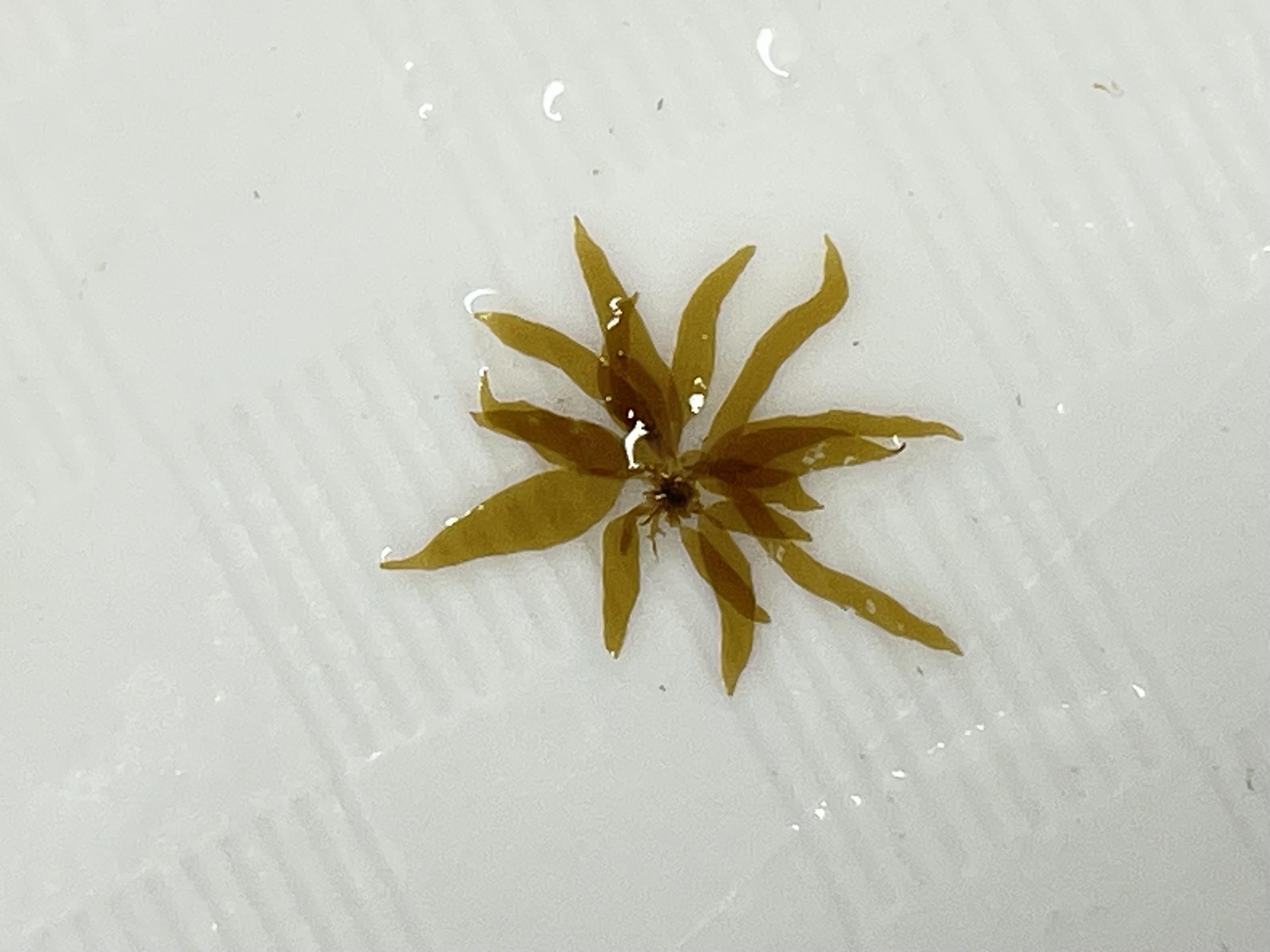
When healthy, New Zealand’s reef ecosystem is a rich and beautiful tapestry of fish species navigating golden-hued kelp forests, pink paint and coralline seaweeds against a backdrop of teal green sea and bubbling tide.
This underwater world is underexplored and underappreciated by many – with spearfishers and snorkellers the most common admirers of its charms.
Yet seaweed holds huge potential, not only for the ecosystem it supports, but for its ability to absorb carbon, filter water and provide a source of nutrients to humans and animals.
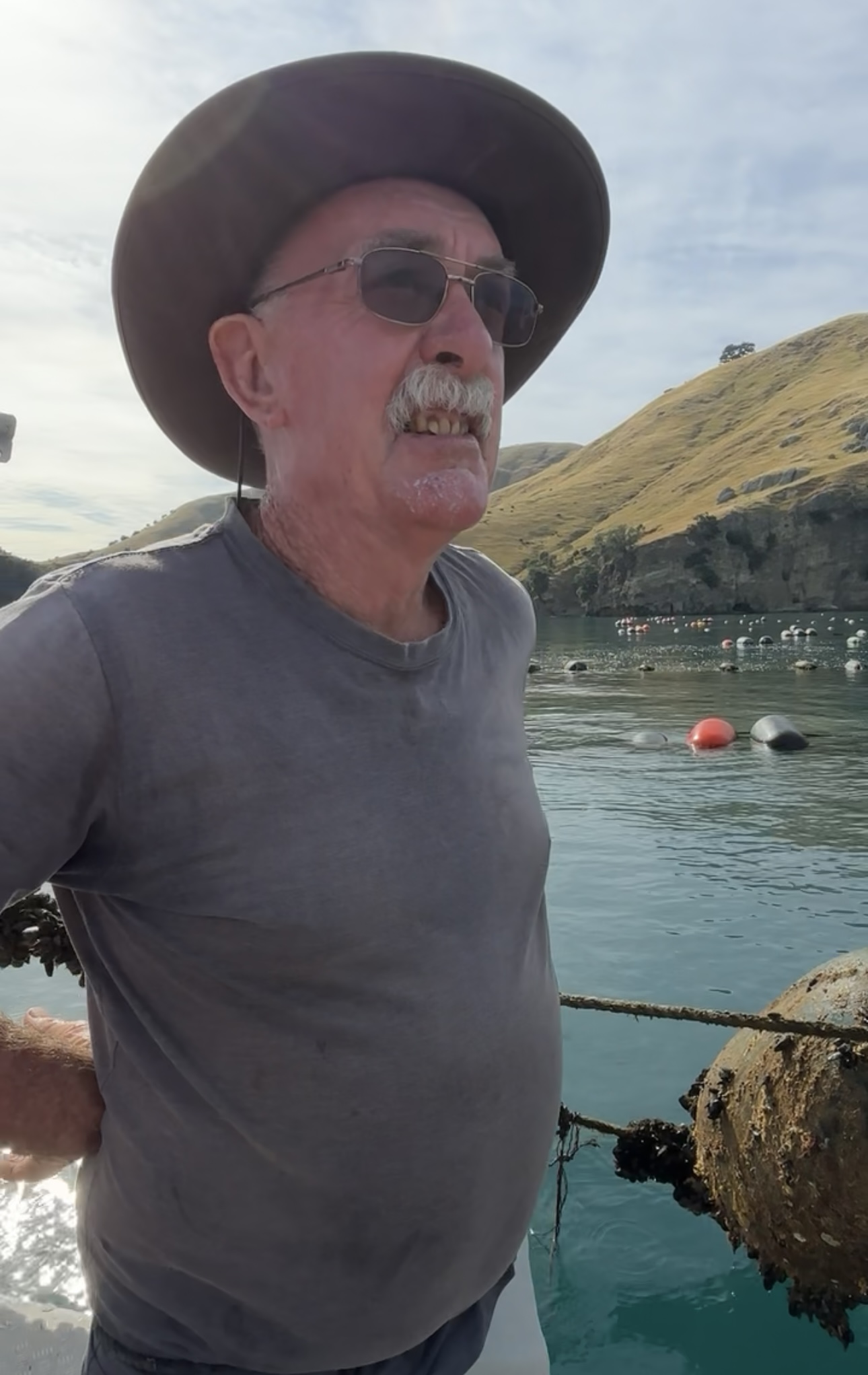
For experienced Coromandel mussel farmer Dave Blyth, it has also provided an unexpected distraction from retirement.
Dave, who says he keeps meaning to retire, has had his retirement sailing trips interrupted by the opportunity to help grow a brand-new seaweed industry in New Zealand alongside ORA through theGreenwave Aotearoa work.
His decades of experience working on the water are proving invaluable to a new generation of aquaculture scientists and researchers – not only through Greenwave Aotearoa but also through his contribution to the ORA Scallops team, which is working to understand how we can bring abundance back to New Zealand’s scallop beds.
Greenwave Aotearoa began as a pilot project funded in part by the Sustainable Food and Fibre Futures Fund (SFFF), administered by the Ministry for Primary Industries. Led by Auckland-based EnviroStrat, Greenwave Aotearoa began building the foundations for a network of regenerative ocean farmers to farm seaweed nationwide.
Māori have used seaweed for centuries – as a food source and for storage. As Te Ara Encyclopedia of New Zealand explains: “With its long coastline and abundant seaweed resources, New Zealand has the potential for a thriving seaweed industry. However, the labour-intensive nature of harvesting and aquaculture has prevented the country from competing against bigger producers in Asia.”
Greenwave Aotearoa has been working to turn this around.
“Our oceans hold vast potential for sustainable innovation and seaweed is one of the most promising solutions,” believes founder Dr Nigel Bradly. “By farming seaweed and creating high value uses for the harvested biomass we can create a future that supports our needs while protecting the environment.”
Getting to this point has taken a great deal of learning.
The project began in the Hauraki Gulf with a seaweed growing trial adapted from existing mussel farm infrastructure off the Coromandel coast. It faced multiple challenges – including an invasion of skeleton shrimp chomping through early-stage growth, a marine heatwave and the complexities of adapting existing infrastructure to grow something that hadn’t been farmed in New Zealand before.
For Dave, it was an opportunity to put years of mussel farming experience to use in an entirely new area of aquaculture. Dave’s practical farming experience comes into its own.
Seaweed farming is new in New Zealand, and the team had initially been using systems designed for growing mussels rather than custom-made for seaweed. Working alongside the scientists, Dave has helped refine the on-water operations, designing and adapting equipment to better suit the needs of the young kelp.
“It’s been a big learning process – you can grow seaweed in a hatchery but it doesn’t automatically follow that they’ll keep growing in the water,” says Dave. “I enjoy the innovating – designing the gear and coming up with new ways of doing things and working with the young people from Greenwave Aotearoa and the University of Waikato.”
The enjoyment comes as much from sharing knowledge as it does from solving problems. “No-one has got all the answers. You don’t curtail their enthusiasm but it’s good to inject how to do things out on the water in a way that will make it easier and more efficient.”
This collaboration between an experienced mussel farmer, scientists and researchers, drawing on international techniques, has been a crucial part of the project’s progress. Dave's ability to translate science into something that works out on the water is equally valuable to the ORA Scallops team.
Dave is contributing his practical knowledge to work involving scallop spat collection and grow-out, helping the team develop the knowledge and techniques that could ultimately support the recovery of wild scallop populations.
While ORA's seaweed restoration and ORA Scallops have different objectives, both benefit from the ingenuity of people who have spent much of their working lives at sea. For Dave, there is still plenty of innovating to be done, and a new generation of researchers and ocean farmers to share his knowledge with.
Those retirement sailing trips might have to wait a little longer.